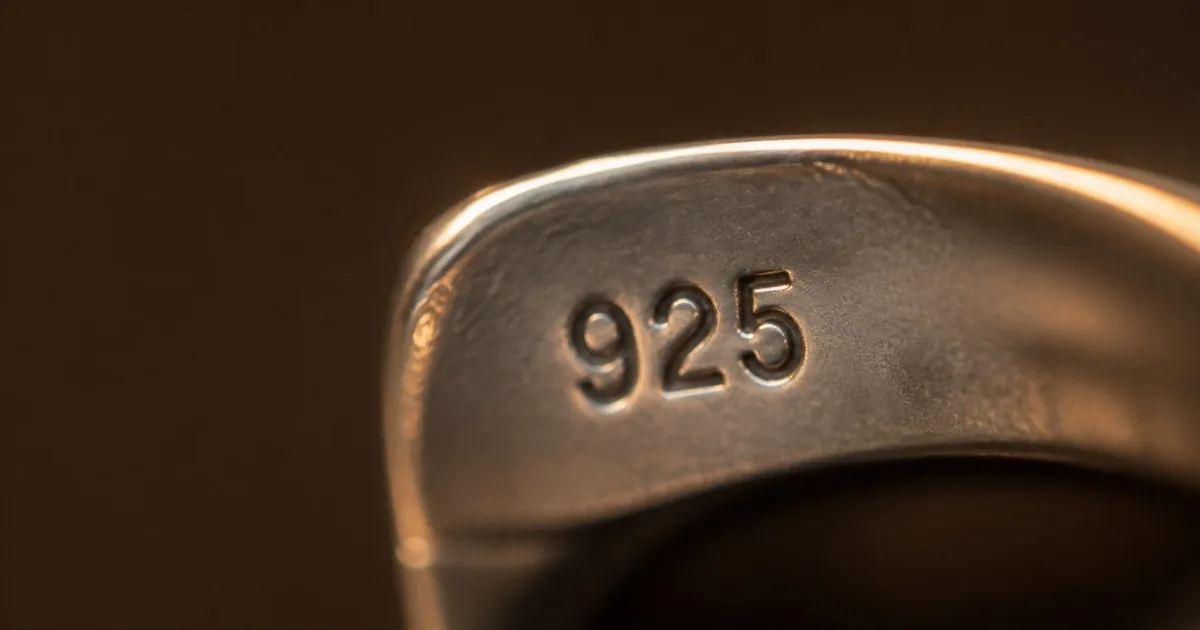
"925 sterling silver" is stamped on almost every silver jewellery listing you'll see, wholesale or retail - but the number itself, and what it's supposed to guarantee, is worth understanding properly before you're the one reselling it to your own customers.
What "925" actually means
Pure silver (999 fine silver) is too soft for most jewellery - it dents and wears down quickly. Sterling silver solves this by alloying 92.5% silver with 7.5% other metal, almost always copper, which adds hardness and durability while keeping the metal's colour and workability close to pure silver. That 92.5% ratio is where the "925" mark comes from, and it's an internationally recognised standard, not a marketing term - genuine sterling silver anywhere in the world is 92.5% silver by weight.
Hallmarking in India: the BIS standard
In India, the Bureau of Indian Standards (BIS) operates the official hallmarking scheme for precious metals, including silver. A BIS hallmark on silver jewellery typically includes the BIS logo, the fineness/purity grade (such as 925), the hallmarking centre's identification mark, and a unique identification (HUID) number that can be verified. Hallmarking is administered through BIS-recognised Assaying & Hallmarking Centres, and its purpose is straightforward: it gives a buyer - wholesale or retail - an independently verified guarantee of purity, rather than relying on the seller's word alone.
One distinction worth understanding clearly: unlike gold, silver hallmarking in India is currently voluntary, not mandatory. BIS introduced HUID-based hallmarking for silver under the revised IS 2112:2025 standard from September 2025, but a seller has to opt into getting a piece hallmarked - it isn't a legal requirement the way gold hallmarking now is. In practice, this means the absence of a BIS hallmark on a piece of silver jewellery does not by itself mean it isn't genuine 925 sterling silver - plenty of authentic sterling silver in the wholesale trade, ours included, isn't individually BIS-hallmarked, since that's a per-piece retail-jewellery process rather than a standard step in wholesale component manufacturing. A hallmark is a strong verification signal when present; its absence is not a red flag on its own.
For a wholesale buyer, this matters in two directions: it protects you when you're buying (you're not paying sterling-silver rates for a lower-purity alloy), and it protects your own credibility when you resell - being able to tell your customers a component is genuine 925 silver, and back that up, is worth more over time than a marginally cheaper unverified alternative. Since most wholesale components won't individually carry a BIS hallmark, the practical checks below matter more day to day than hallmark-hunting.
What to actually check before ordering wholesale
- Ask directly. A supplier should be able to state plainly that their silver is 925 sterling silver and explain their sourcing - vagueness on this point is worth probing further.
- Request a sample first. For a new supplier relationship, a small sample order lets you verify quality and finish before committing to a bulk order - reputable wholesale suppliers generally accommodate this.
- Weigh what you receive. Since silver is priced by weight, and each design should have a stated weight, a simple gram-scale check against the listed weight is a fast sanity check on any bulk shipment.
- Watch for "silver-plated" or "silver-toned" language. These describe a thin silver (or silver-coloured alloy) coating over a base metal - a completely different, much cheaper product than solid sterling silver, and not something that should be priced or marketed as 925.
How this shows up in our own catalogue
Every design across our Bali Beads and other collections is genuine 925 sterling silver, listed with its exact weight so the purity-to-cost relationship is transparent - no fixed price is shown because silver is priced against the day's market rate (see our companion piece on why wholesale silver pricing isn't fixed), but the underlying material specification never changes.